It’s All About the Color: How One Beading Pattern Can Create Endless Variations
One of the most fascinating things about beadwork is how dramatically a design can change depending on the seed bead colors you choose.
Recently, Heather Jackson, a member of The Tales Of Beads Facebook Group and one of the fastest beaders on Earth 👋🏻, suggested running a small experiment with two of my peyote star designs. We created a number of different color palettes for each one, and she tested them.
The result? The same design suddenly looked completely new — all thanks to the power of color. This actually means that a single beading pattern can give you dozens of different beaded ornaments! With just a few palette changes, you can decorate an entire Christmas tree using one pattern — the possibilities are almost endless.
Scroll down and you’ll see how color can transform the same peyote star design.
A Carnival of Colors: Experimenting with a Peyote Star Pattern ⭐️
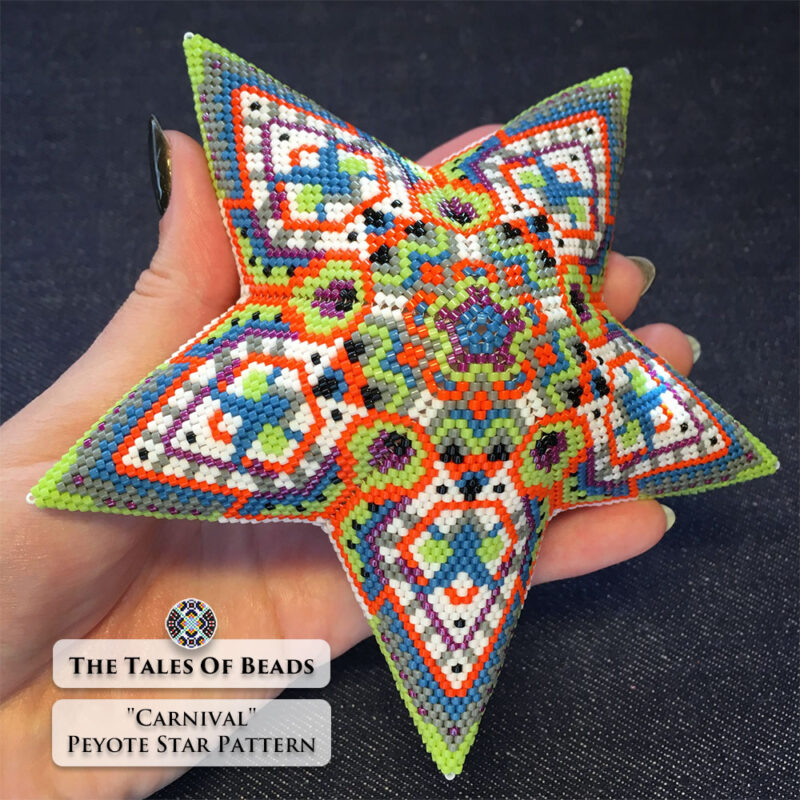
“Carnival” Peyote Star became Our first guinea pig. It’s a fairly big star with a geometric motif that requires seven colors. The original color combo features white, dark teal, orange, chartreuse, and touches of purple, black, and grey.
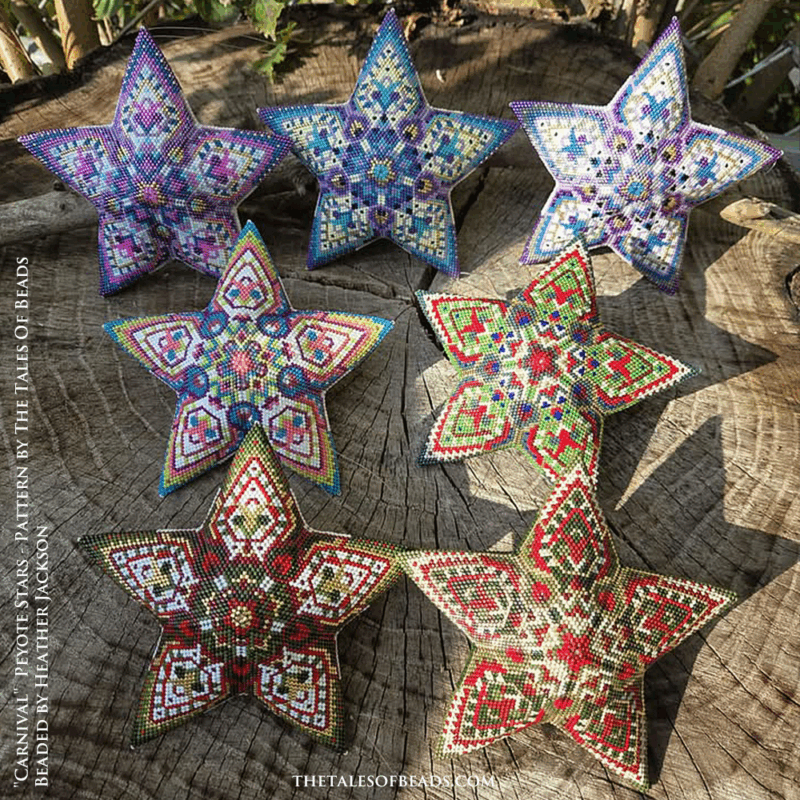
Heather wanted to include more purple shades, and the ladies in the Group suggested trying the traditional Christmas colors. After a long and careful process of matching the colors “on paper”, seven new color palettes were born, tested and photographed. Ta-da!

The first three are the purple fantasy versions – I substituted only a few colors from the original design, shifted some shades here and there, and introduced a few new ones: gold, turquoise blue, and hot pink.


The next three feature classic Christmas colors — different shades of green, red, and gold. This change gives the design a completely new look.


The seventh star is simply the result of endless clicking through color swatches to see what might work. This little trial-and-error experiment ended up producing a very joyful and playful palette.

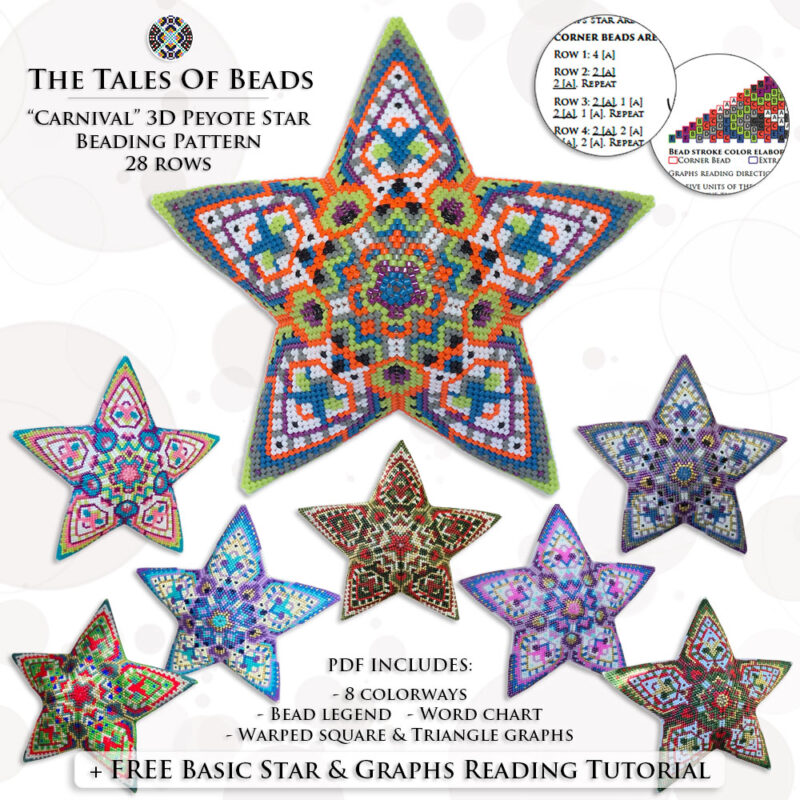


All of these color options are included in the pattern, so you can easily choose your favorite combination or try them all! Each color combo is presented with bead codes for Miyuki Delica 11/0, Toho and Preciosa seed beads, and the required amount in beads and grams.
Color DAnce: Monochrome Peyote STar Magic 🎨
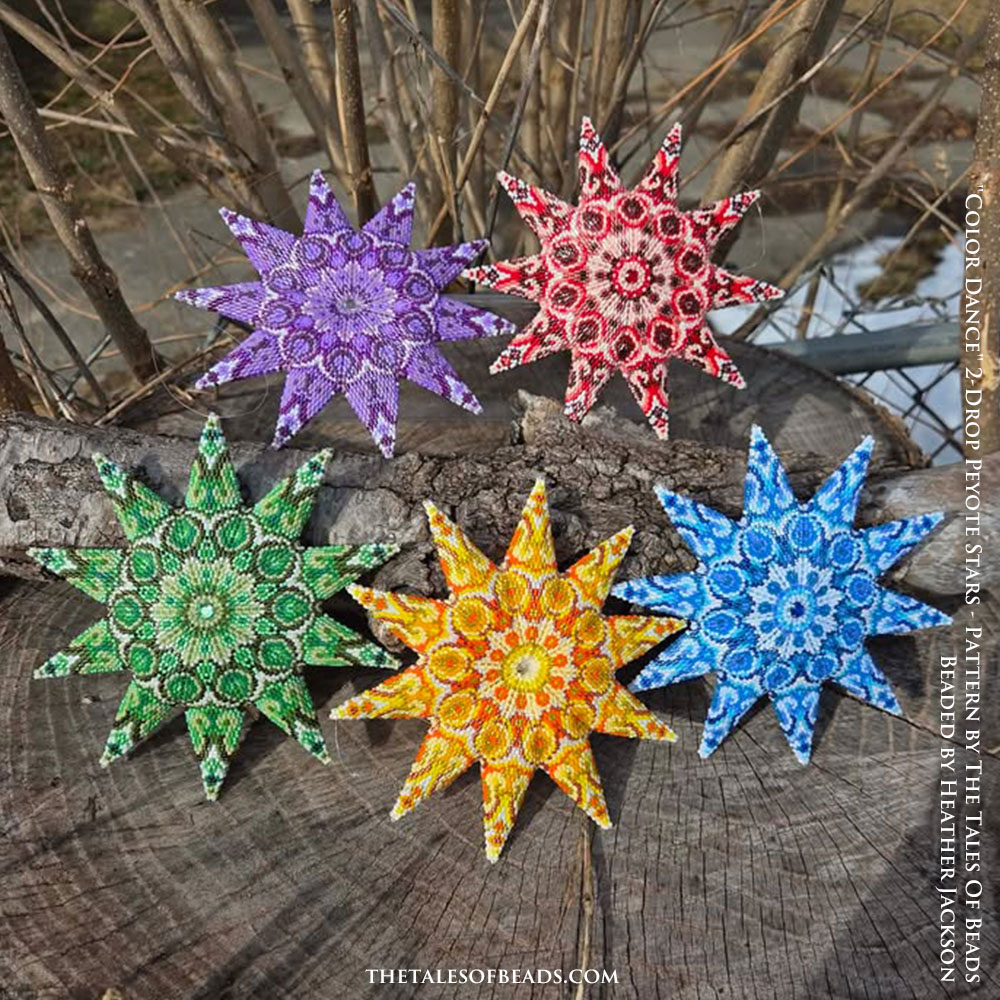
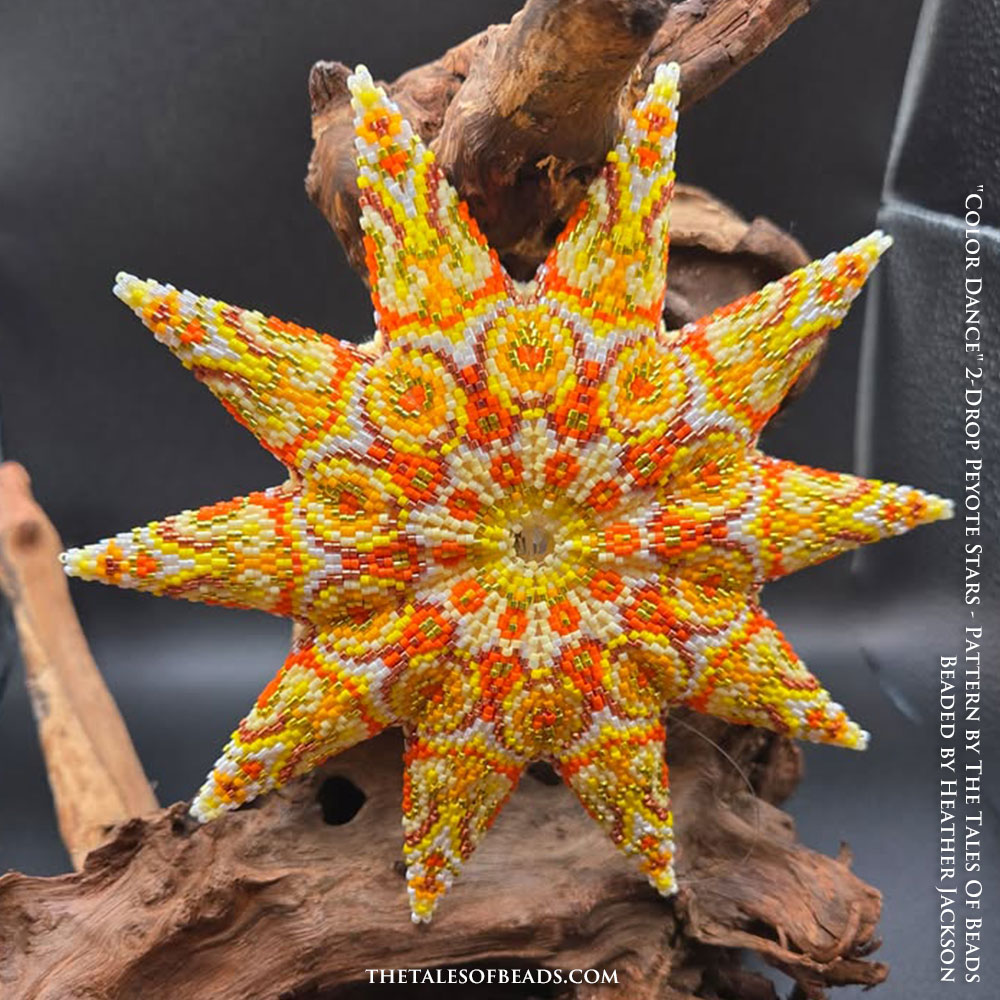
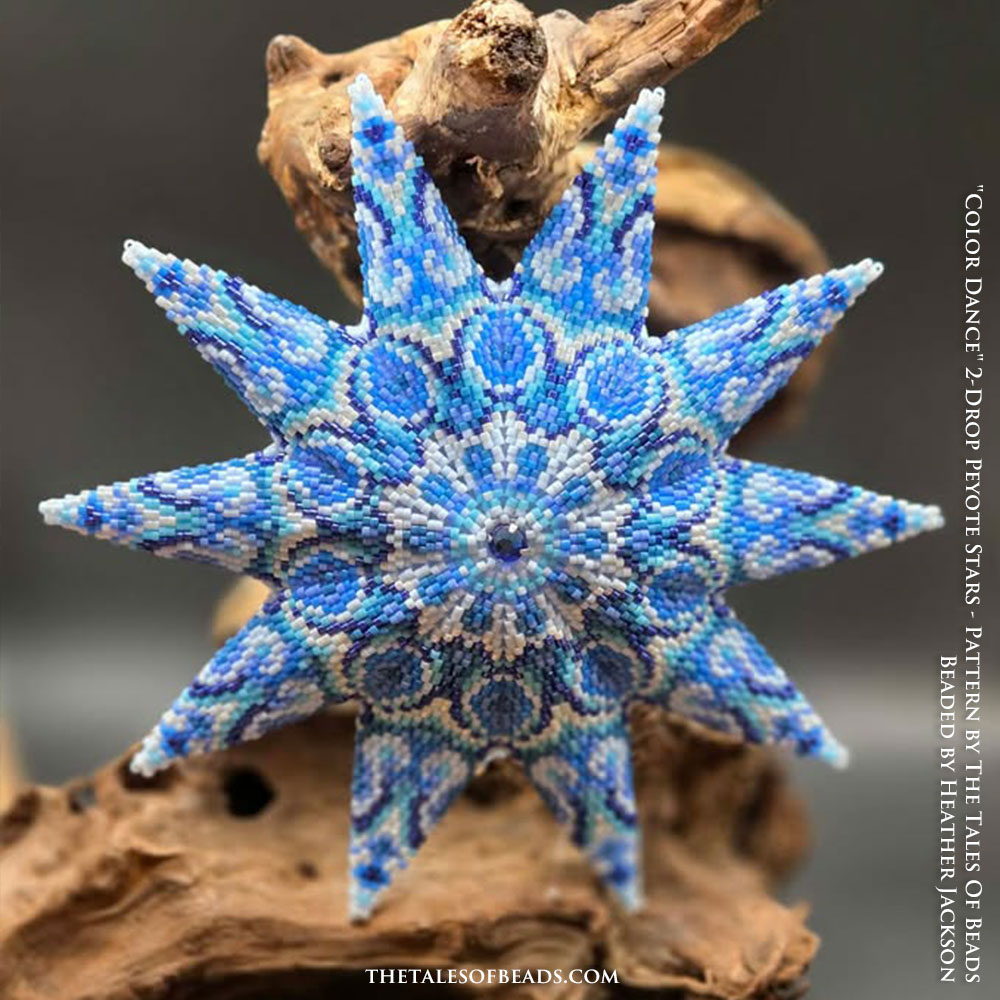
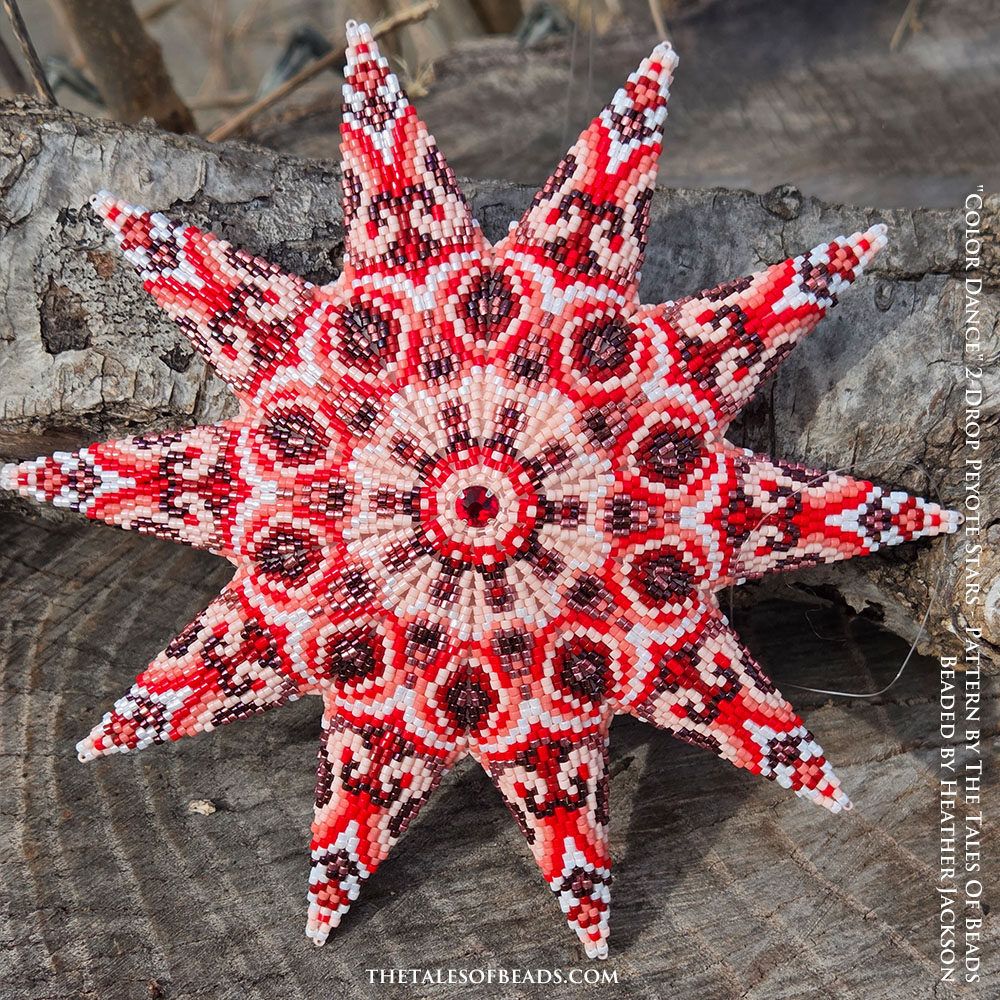
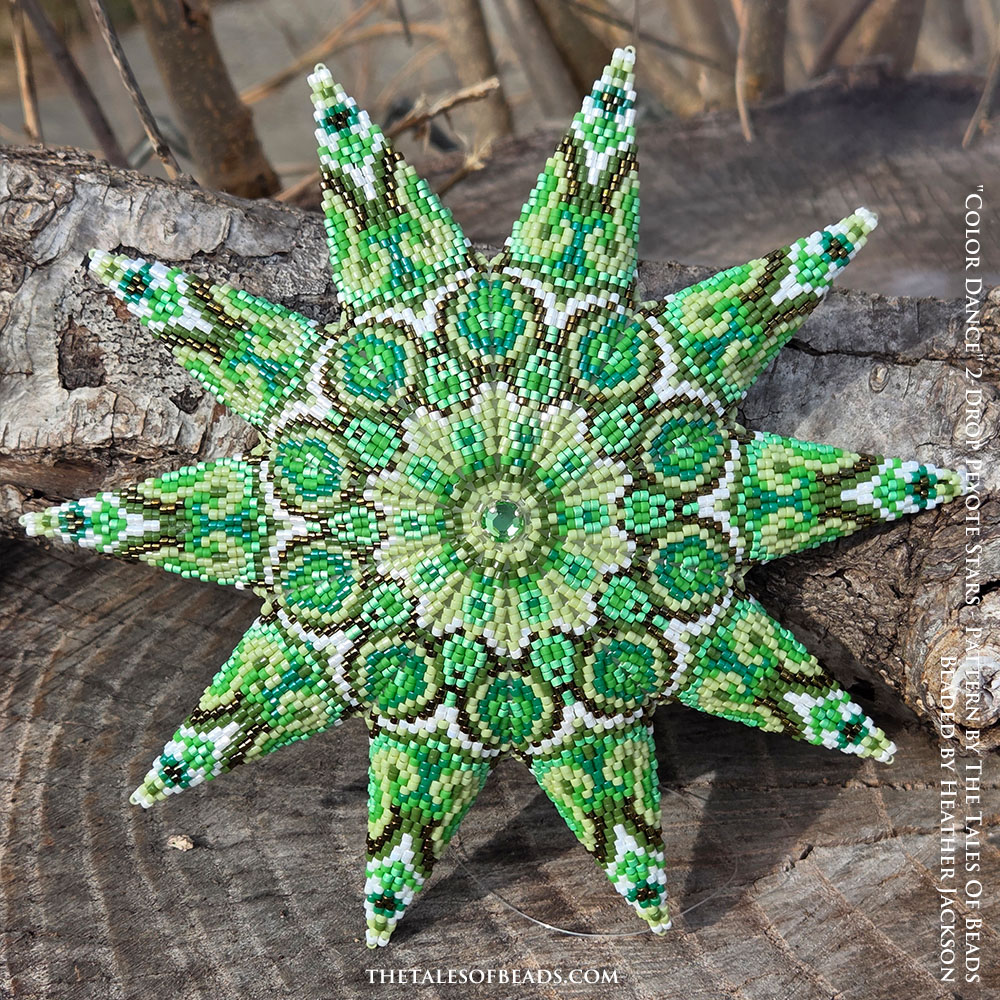
For our next experiment, we chose the “Funfair” 2-Drop Peyote Star. It originally combines seven very basic colors, like blue, red, yellow and white. so we decided to try a series of palettes built around a single color. In total, we created 6+ monochrome versions, Each version uses six shades of one color plus white.
The yellow one feels bright and sunny, almost like a little piece of sunshine.

The blue palette brings to mind traditional Gzhel ceramics or Azulejos tiles, with their elegant blue-and-white patterns.

The red version looks festive and romantic – an ideal ornament or gift for Valentine’s Day.

The green version naturally evokes St. Patrick’s Day celebrations.

The purple one simply had to exist – Heather’s favorite color couldn’t possibly be left out.
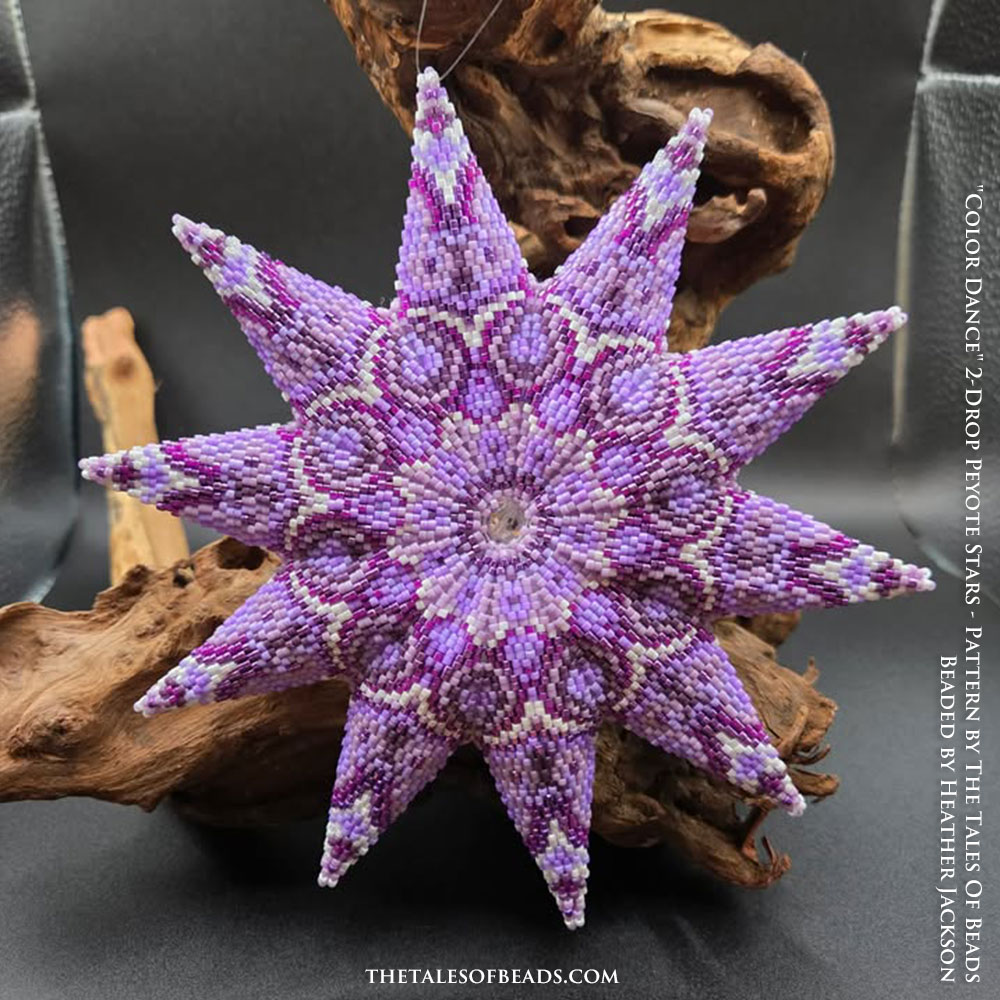

And finally, the mermaid’s treasure filled with all the colors of the sea – the turquoise star, and the Snow Queen’s jewel which sparkles softly and looks like a delicate snowflake – the white one.

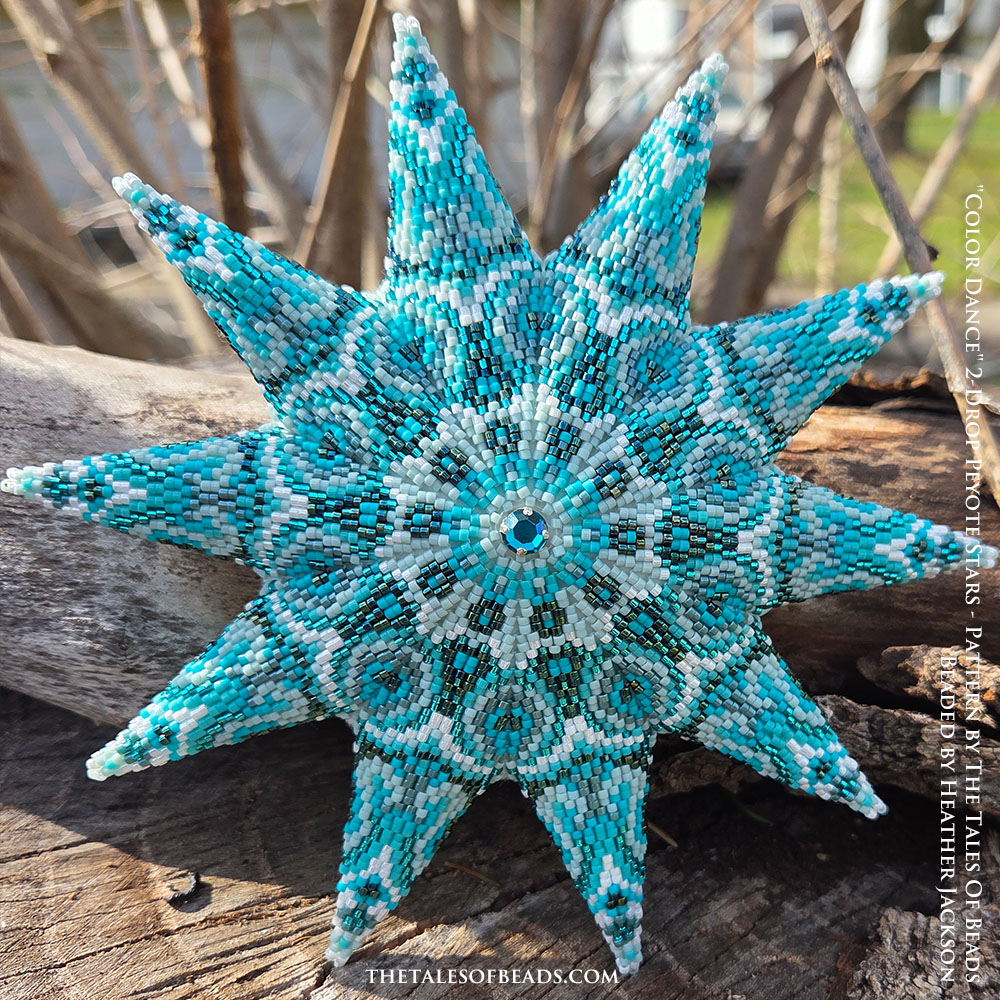
This time we experimented not only with color, but also with texture. Along with regular seed beads, we mixed metallic and matte finishes, which added extra depth and sparkle to the design. Fortunately, Miyuki Delica seed beads offer a very wide color palette, making these monochrome experiments possible and allowing us to find multiple shades within the same color family.
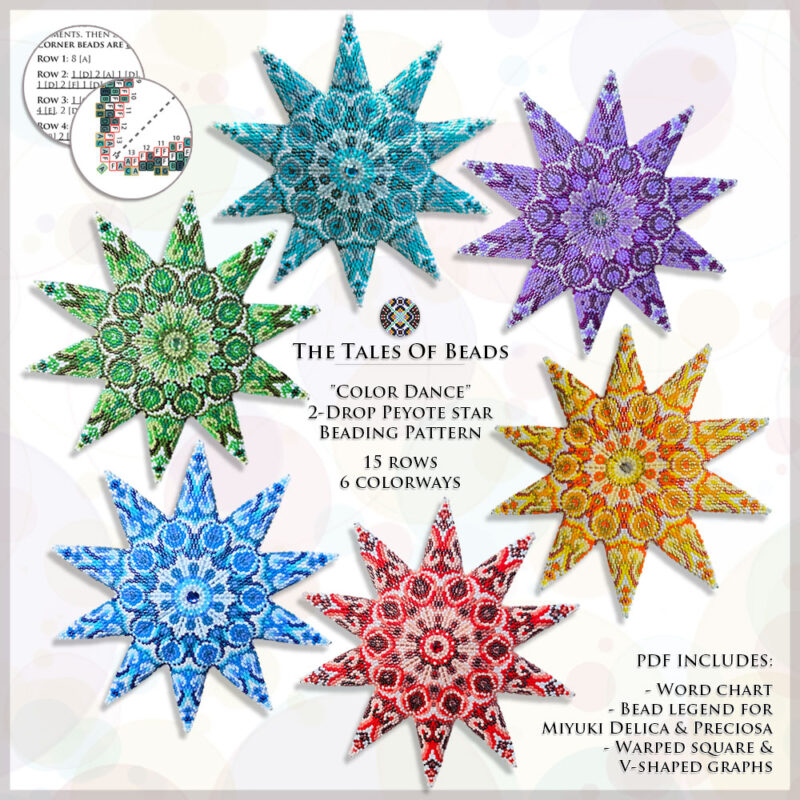
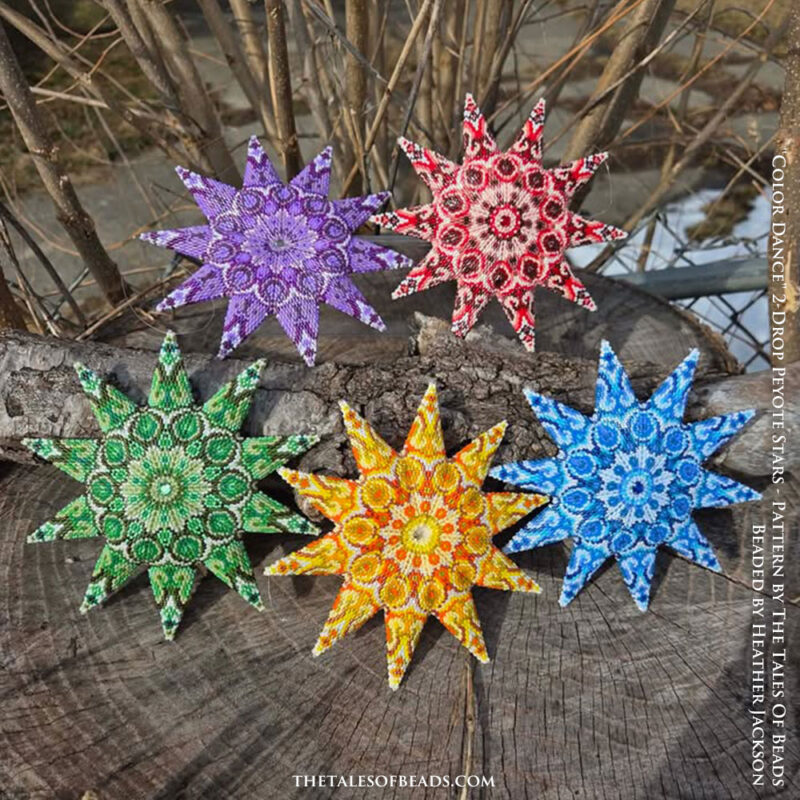


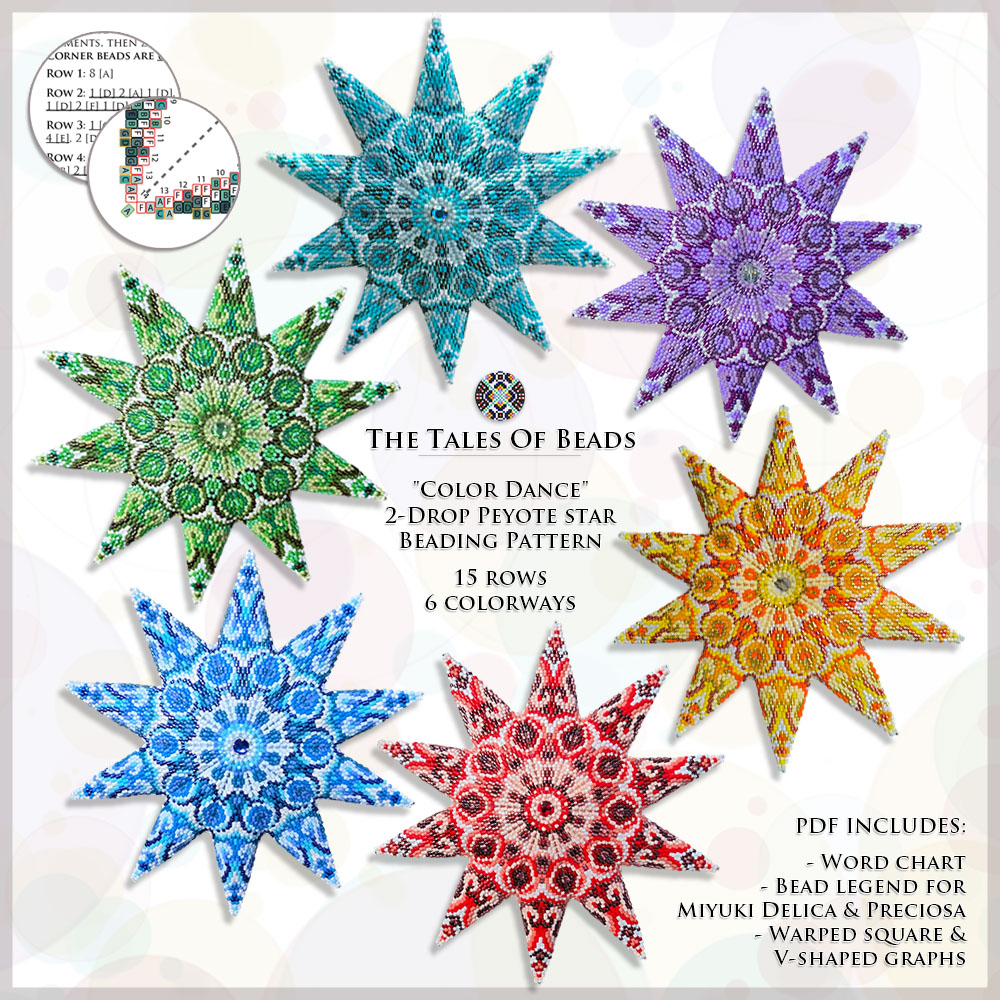
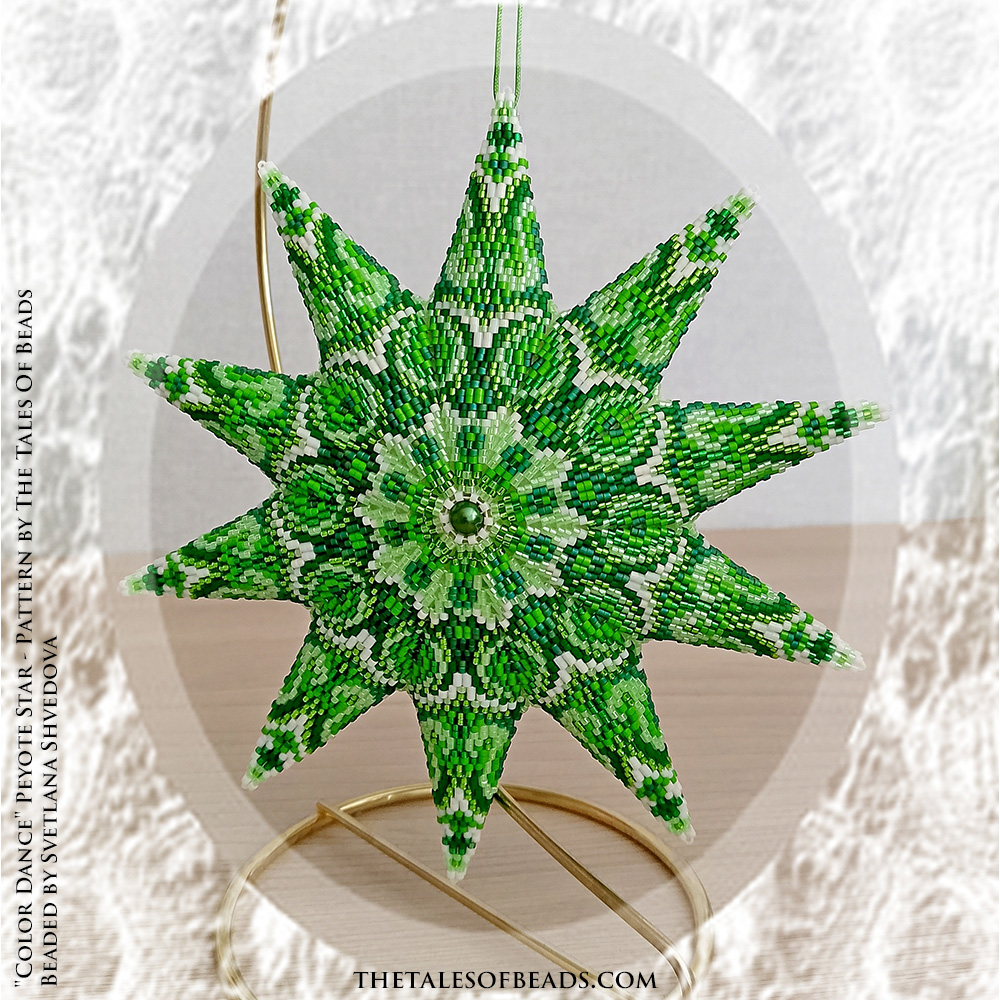
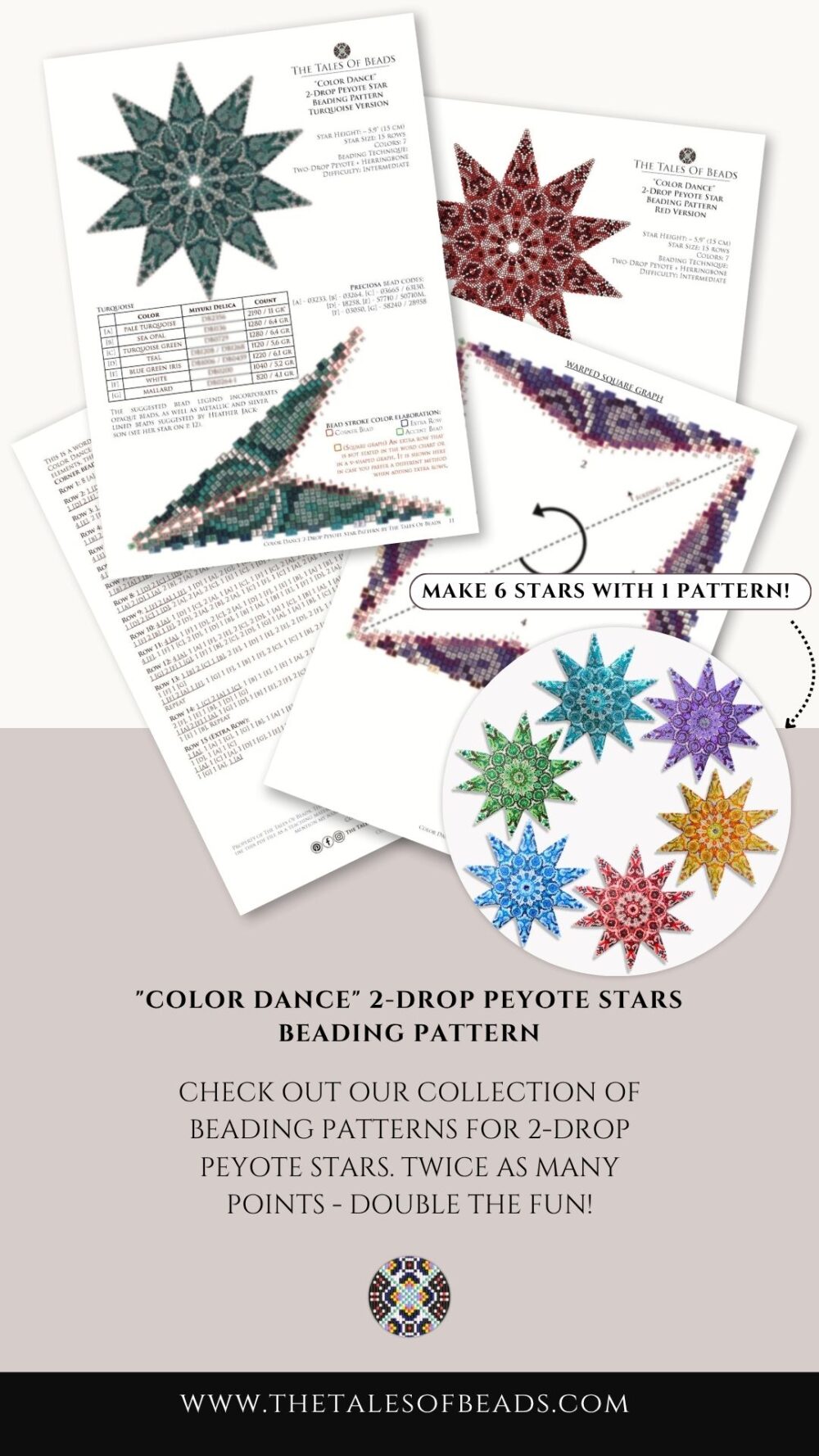
All of these color experiments lead us so far from the original, that this group of stars received their own name, the “Color Dance”. The pattern for these includes a word chart, graphs, and a bead legend for size 11/0 Miyuki Delica and Preciosa seed beads with bead codes, amounts and possible alternatives for each colorway. Choose your favorite combination – or try them all! If you’d like to make the original “Funfair” star, too, check out our special value set – the 2-Drop Peyote Star Beading Pattern Bundle.
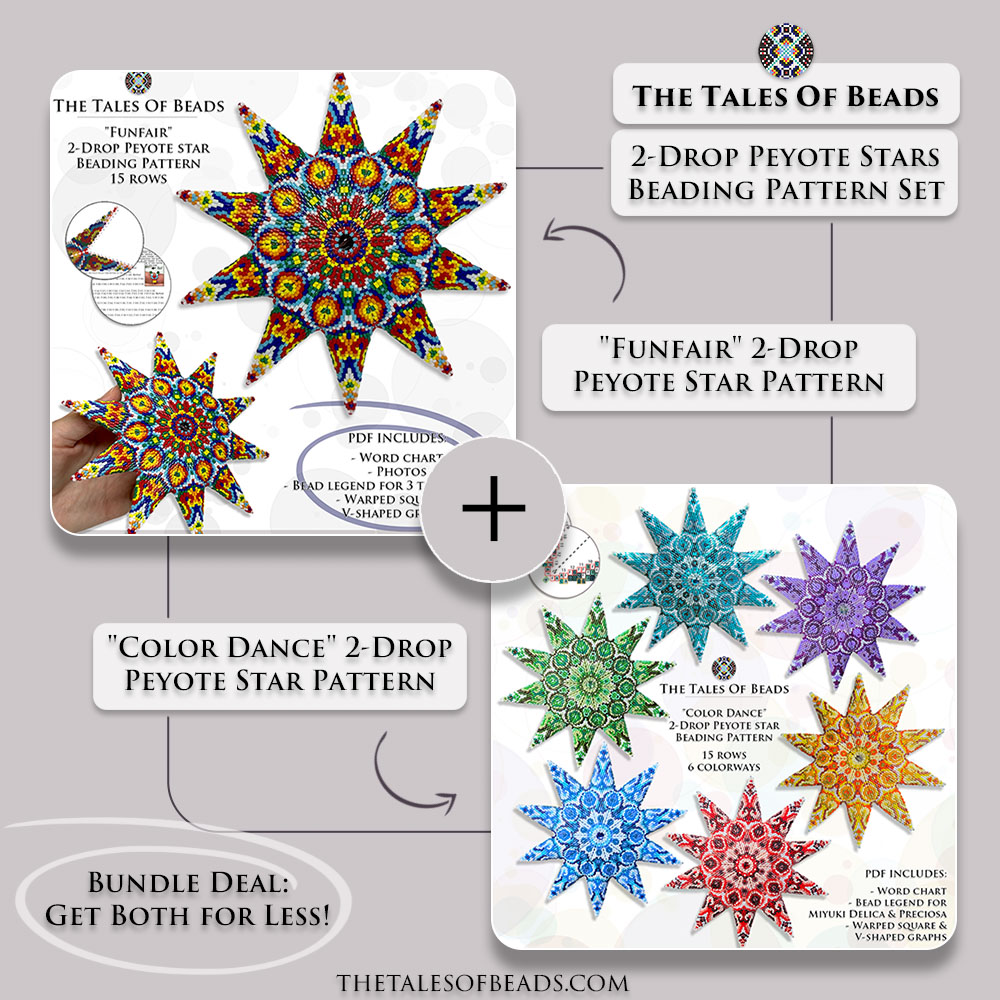
2-Drop Peyote Star Beading Pattern Bundle – Funfair + Color Dance (7 Designs)

How to Experiment with Colors in Beading Patterns 👩🏻🎨
If you’d like to try creating your own variations, here are a few simple tips:
Start with a small palette
3–5 colors are usually enough to create a balanced design. Once you understand how the pattern behaves, you can always expand the palette.


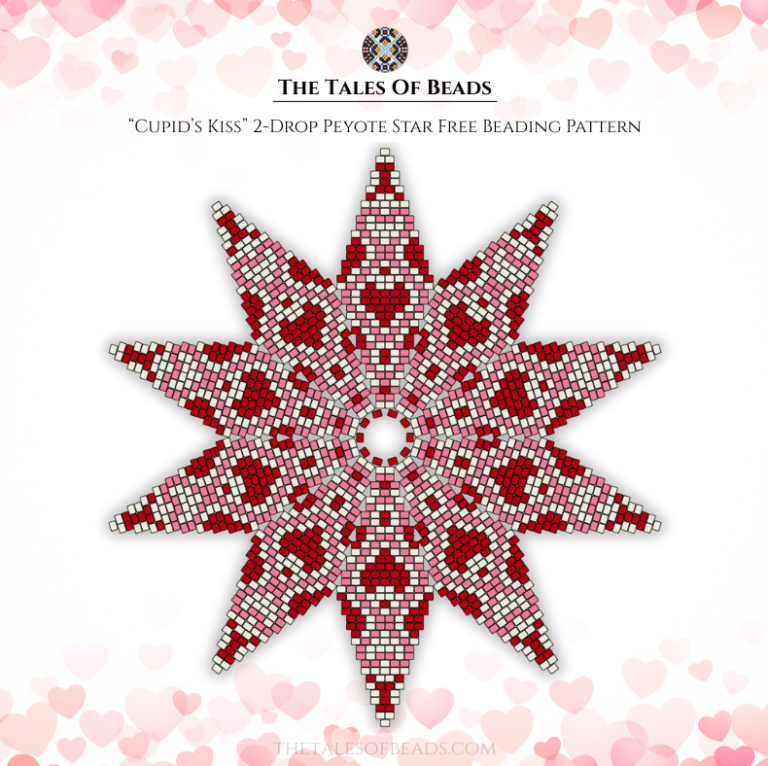
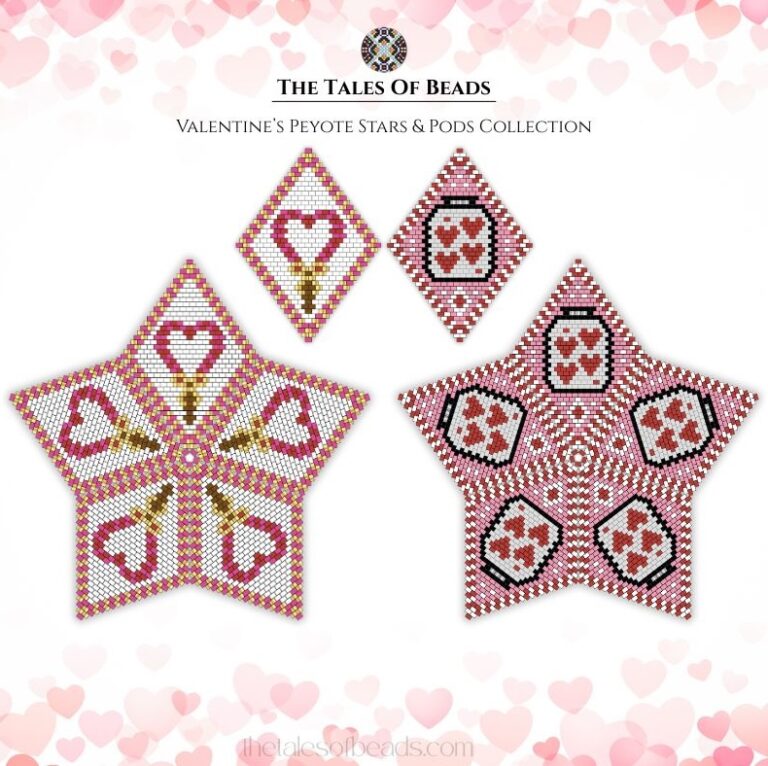
Here is a great example of how versatile even a simple design can be – two completely different “Cupid’s Kiss” 2-Drop Peyotes Star from this post:
Use contrast intentionally
Placing light and dark shades next to each other helps the pattern stand out and reveals the structure of the design.
Change one color at a time
Small adjustments often produce the most interesting results. Try replacing a single shade first and see how the entire motif changes.
Test palettes on a graph first
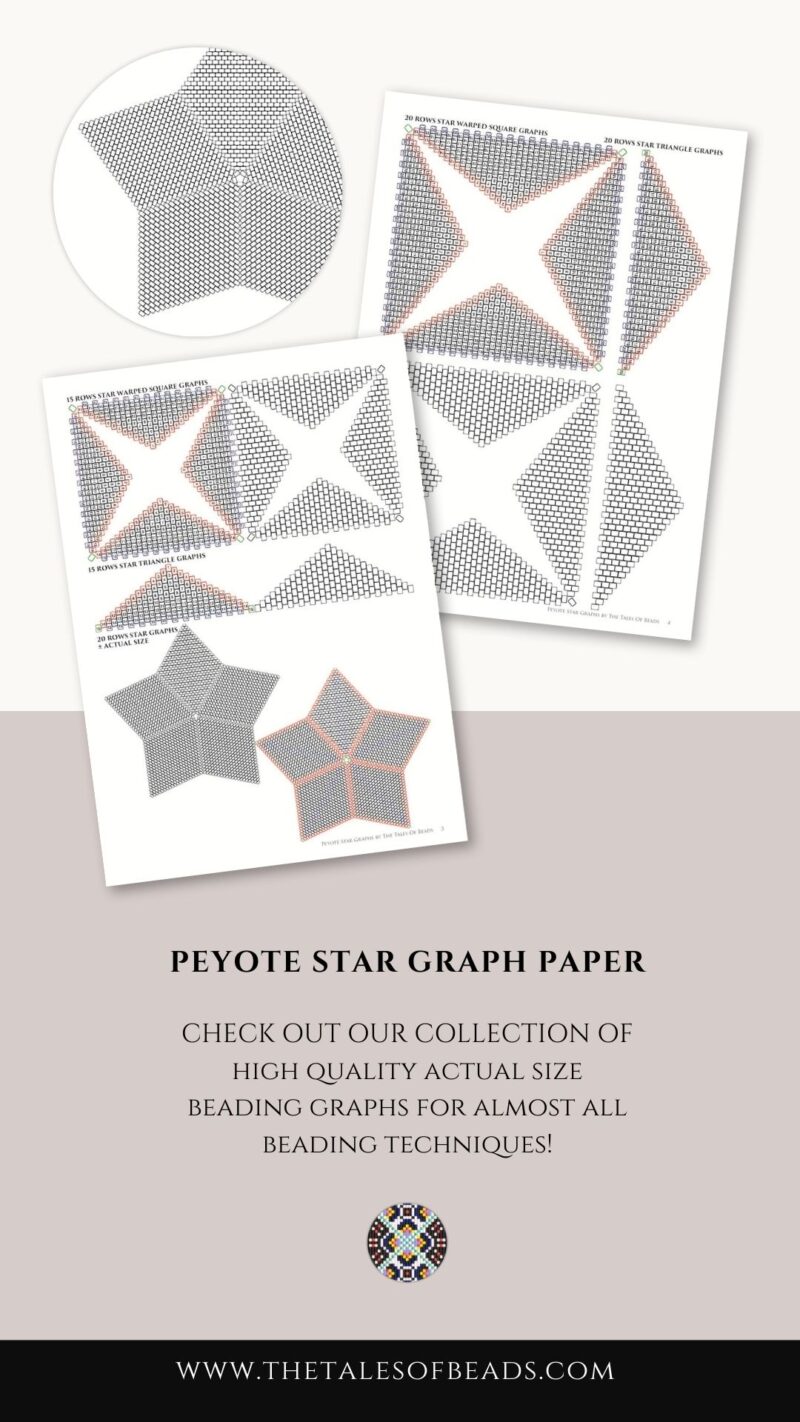
Trying color combinations on a beading graph is much faster than re-beading the entire piece. It allows you to experiment freely without wasting time or materials. the Seed bead Graph Paper section on our website includes bead graphs for almost all techniques, making it much easier to plan your own designs.
Helpful Tools for Finding Seed Bead Color Combinations ✏️
If you’d like some inspiration for your own experiments, these resources can help:
• our Seed Bead Color Palette posts, where we share ready-to-use color combos
• our Pinterest board with color palettes, perfect for exploring new ideas
• our peyote star beading graphs, which make it easy to test different palettes before you start beading.



The Magic of Color ✨
A single beading pattern can turn into a whole collection of ornaments simply by changing the colors. So open your bead boxes, pick a few shades you love, and start experimenting! You might be surprised how many different tales a single pattern can tell.

The Tales Of Beads